- 13.05.2026 - 09:19
On May 6, 2026, the AOK Federal Association presented the latest “Hospital Report 2026” in Berlin. The event focused on a critical interim assessment of the German hospital reform that recently came into effect. The report’s key finding: More than half (56 percent) of hospital admissions in Germany could be avoided or treated on an outpatient basis. Furthermore, the authors criticize that the reform in its current form—particularly due to numerous exemptions and the structure of the reserve payment system—jeopardizes the necessary structural shift toward greater quality and efficiency.
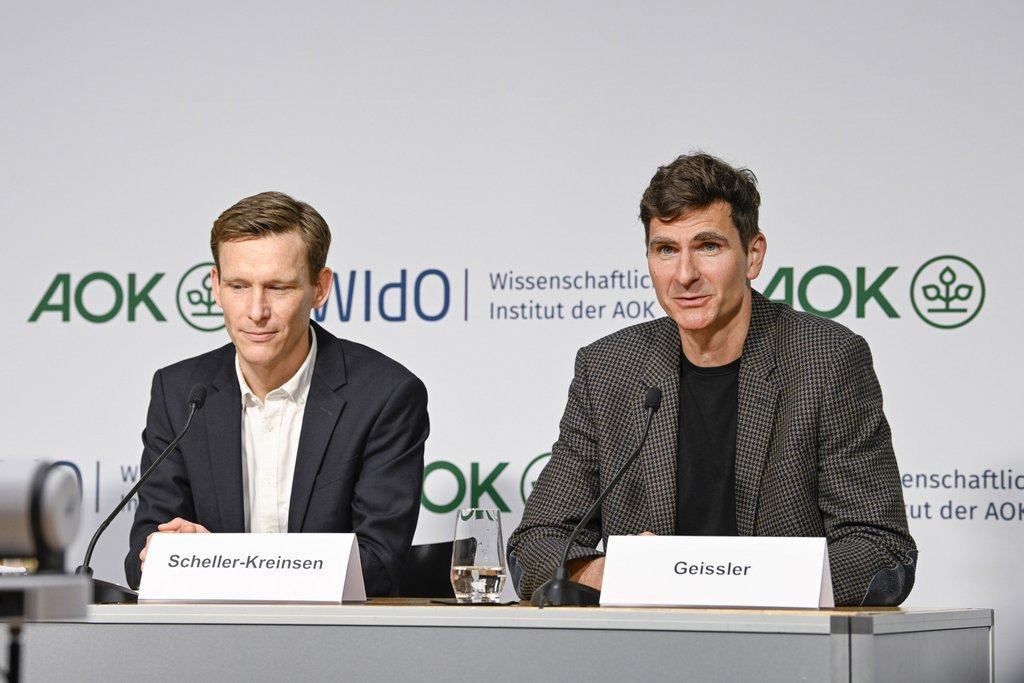
To demonstrate how a performance- and quality-oriented restructuring of the hospital landscape can succeed, the AOK invited Prof. Dr. Alexander Geissler, Professor of Health Economics, Policy, and Management at the School of Medicine at the University of St. Gallen, to the panel as an expert.
Swiss Service Groups as a Model - and a Warning
In Berlin, Prof. Dr. Alexander Geissler presented, among other things, the findings of the report’s article “Impulses for the Further Development of Service Groups: A Comparison of Switzerland with Germany.” In Switzerland, hospital planning and the awarding of care contracts have been based on so-called service groups since 2012. However, the details are left to the individual cantons, which has led to varying quality standards and exceptions.
“The analysis clearly shows that potential exemptions from quality standards are also utilized even when there is no obligation to implement them,” Prof. Geissler explained at the press conference. With regard to the German reform, he concluded:
“If there are too many exceptions, there is a risk that the reform process initiated by the legislature will be undermined, and the performance- and quality-oriented restructuring of the hospital landscape will fail to take effect due to a patchwork of requirements.”
Widespread media coverage underscores the importance of knowledge transfer
The press conference, attended by Prof. Dr. Alexander Geissler, Dr. Carola Reimann (Chairwoman of the AOK Federal Association), and Dr. David Scheller-Kreinsen (Managing Director of WIdO), drew significant media interest. The warning against a “patchwork quilt” and the call for more consistent shift toward outpatient care were taken up across the industry.
Coverage spanned all major channels: On TV and radio, for example, ZDF’s heute journal, ZDF’s Mittagsmagazin, and MDR Aktuell reported in detail. Specialized media outlets such as the Deutsche Ärzteblatt, Apotheken Umschau, and Politico Pro Gesundheit also covered the story. Most recently, the Tagesspiegel and numerous online news portals also picked up on the findings of the report and the press conference. This broad reception underscores the high standing that international comparative studies and the expertise of the University of St. Gallen hold in the current health policy debate in Germany. For the School of Medicine, this impressively demonstrates the successful transfer of academic research into health policy practice and public discourse.
Fotocredit: AOK/Andrea Katheder
For more Information: